
 Image 1 of 1
Foundational. Essential. Non-Negotiable.
The Laser Safety Officer course is the cornerstone of safe and ethical laser practice. This course is designed to instill a deep respect for laser technology and the responsibility that comes with operating Class IV medical devices.
Students will gain a thorough understanding of laser safety regulations, clinic protocols, and risk mitigation strategies in accordance with Canadian and British Columbia standards. Emphasis is placed on real-world application, ensuring graduates can confidently uphold safety standards within any medical aesthetic environment.
The Science That Separates Technicians From Masters.
Laser Physics is where true understanding begins.
This course provides an in-depth exploration of how light energy interacts with skin, hair, and tissue. Students move beyond memorization into true comprehension, learning how to think critically, select appropriate parameters, and predict tissue response with confidence.
Laser Physics is taught in a clear, clinical, and applied manner, bridging the gap between theory and treatment execution.
What to expect in this course:
Comprehensive understanding of laser classifications and risk levels
Responsibilities and role of the Laser Safety Officer in a clinical setting
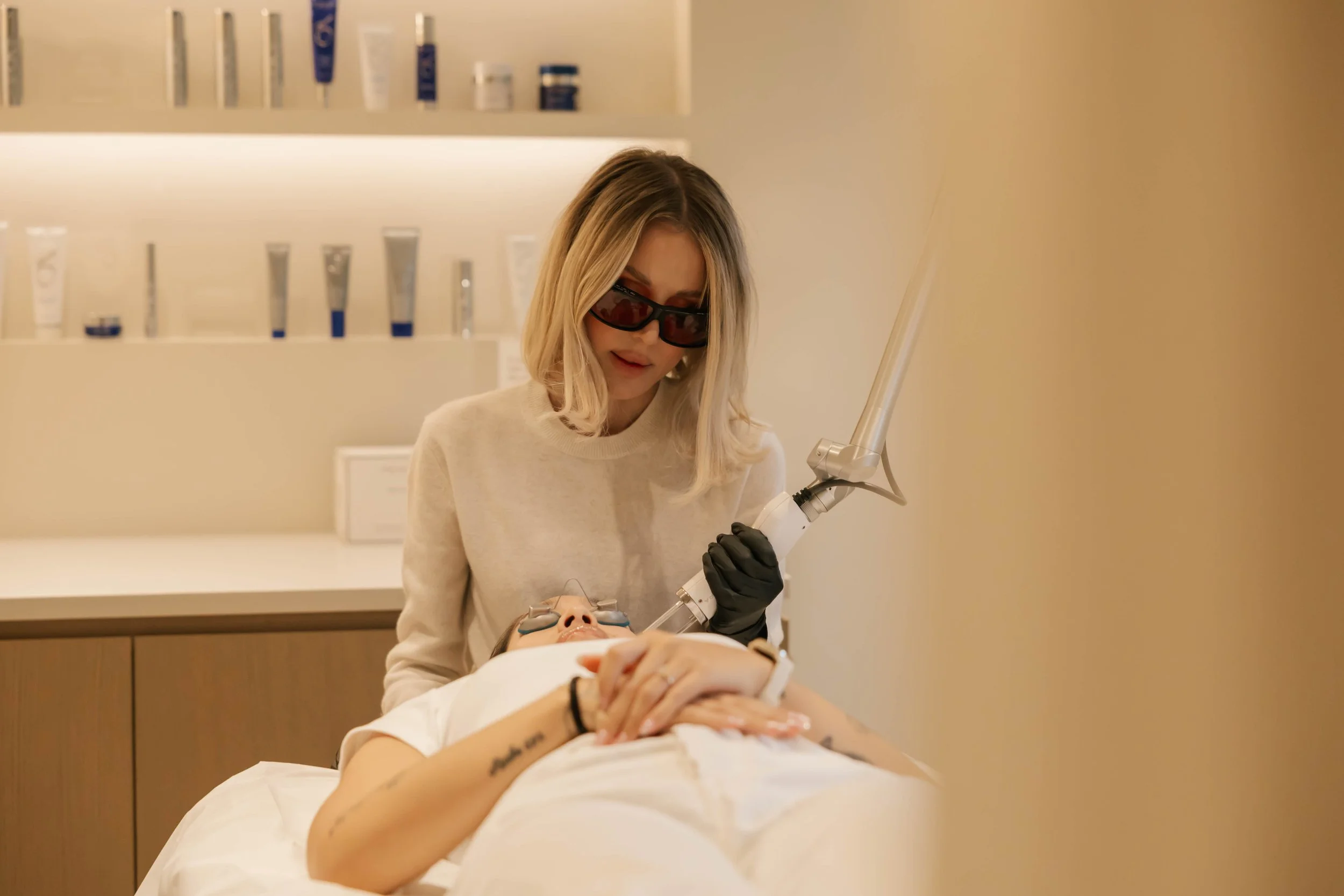
Proper use of protective equipment and wavelength-specific eyewear
Treatment room safety, signage, and controlled access protocols
Emergency procedures, adverse event response, and incident documentation
Regulatory compliance and professional accountabilityCore principles of laser and light-based technologies
Differences between laser and IPL systems
Wavelengths, tissue penetration, and chromophore targeting
Selective photothermolysis and thermal relaxation time
Pulse duration, fluence, spot size, and repetition rate
Cooling methods and epidermal protection
Understanding laser–tissue interactions and clinical endpoints
This course prepares students to operate with confidence, authority, and an unwavering commitment to safety, forming the foundation for all advanced laser education. Graduates leave with a working knowledge of laser behavior that empowers safer treatments, better outcomes, and professional confidence across all advanced modalities.
Upcoming Courses:
September 13-27, 2026 (every Sunday)
Foundational. Essential. Non-Negotiable.
The Laser Safety Officer course is the cornerstone of safe and ethical laser practice. This course is designed to instill a deep respect for laser technology and the responsibility that comes with operating Class IV medical devices.
Students will gain a thorough understanding of laser safety regulations, clinic protocols, and risk mitigation strategies in accordance with Canadian and British Columbia standards. Emphasis is placed on real-world application, ensuring graduates can confidently uphold safety standards within any medical aesthetic environment.
The Science That Separates Technicians From Masters.
Laser Physics is where true understanding begins.
This course provides an in-depth exploration of how light energy interacts with skin, hair, and tissue. Students move beyond memorization into true comprehension, learning how to think critically, select appropriate parameters, and predict tissue response with confidence.
Laser Physics is taught in a clear, clinical, and applied manner, bridging the gap between theory and treatment execution.
What to expect in this course:
Comprehensive understanding of laser classifications and risk levels
Responsibilities and role of the Laser Safety Officer in a clinical setting
Proper use of protective equipment and wavelength-specific eyewear
Treatment room safety, signage, and controlled access protocols
Emergency procedures, adverse event response, and incident documentation
Regulatory compliance and professional accountabilityCore principles of laser and light-based technologies
Differences between laser and IPL systems
Wavelengths, tissue penetration, and chromophore targeting
Selective photothermolysis and thermal relaxation time
Pulse duration, fluence, spot size, and repetition rate
Cooling methods and epidermal protection
Understanding laser–tissue interactions and clinical endpoints
This course prepares students to operate with confidence, authority, and an unwavering commitment to safety, forming the foundation for all advanced laser education. Graduates leave with a working knowledge of laser behavior that empowers safer treatments, better outcomes, and professional confidence across all advanced modalities.
Upcoming Courses:
September 13-27, 2026 (every Sunday)